

Las Vegas Rental Market Forecast for 2027 and 2028
The most likely direction for the Las Vegas rental market is continued stabilization at rent levels that remain substantially above their pre-pandemic baseline, with greater competition among available rental homes than Owners experienced earlier in 2026.
The latest data continues a trend that has developed across several reporting periods. Available single-family rental inventory has increased from approximately 2,000 to 2,200, 2,450, and now 2,500 homes, while completed leases have declined from approximately 1,400 to 1,300, 1,225, and now 1,180. Months of available inventory increased from approximately 1.5 to 1.7, 2.0, and now 2.1 months.
This does not establish a distressed or deeply oversupplied rental market. Rice Real Estate & Property Management is still leasing properly priced and prepared homes in approximately 14 to 21 days at their original asking rent. The difference is that fewer renters are competing for each property, making pricing, condition, showing access, and execution more important.
Base-Case Rental Forecast
- Single-family rental demand should remain active but more selective.
- Rent growth is likely to remain slower than it was between 2020 and 2024.
- Well-maintained homes priced near comparable rentals should continue to attract qualified applicants.
- Properly positioned homes may still lease at their original asking rent even as overall inventory increases.
- Applicant volume may remain lower, making timely showing access and follow-up increasingly important.
- Overpriced or poorly prepared homes may experience substantially longer marketing periods.
- Results will continue to vary by neighborhood, price range, property type, condition, and season.
What Could Strengthen Rental Demand?
Rental demand may remain supported when mortgage rates and the overall cost of homeownership make purchasing difficult for households that might otherwise move from renting into homeownership.
Higher borrowing costs can increase the monthly payment required to purchase a home, causing some households to remain renters longer even when they would eventually prefer to buy.
Rice Real Estate & Property Management also continues to lease homes to both local Residents and households relocating from other states. Relocating households frequently rent before deciding whether and where to purchase, particularly when they are unfamiliar with the differences among Las Vegas, Henderson, Summerlin, North Las Vegas, and surrounding communities.
What Could Place More Pressure on Rents?
- Available rental inventory continues increasing faster than leasing activity.
- Months of available rental inventory continues moving higher.
- Applicant volume continues declining.
- Employment or consumer confidence weakens.
- Household affordability limits additional rent increases.
- New apartments or build-to-rent communities add competing supply.
- Existing rental Owners become more aggressive with concessions or pricing.
- Lower mortgage rates eventually allow more renters to purchase homes.
Several consecutive reporting periods of rising inventory and declining leasing activity are now worth watching as a developing trend. They still do not, by themselves, establish a long-term rental downturn. A more significant deterioration would involve sustained increases in available rentals together with substantially longer marketing times, widespread rent reductions, greater use of concessions, and difficulty leasing properly priced and well-prepared homes.
Is Las Vegas a Landlord-Friendly Rental Market?
Nevada is often described as landlord-friendly in part because it does not currently impose a general statewide percentage cap on ordinary market-rate residential rent increases.
That flexibility does not mean rent can be changed at any time or without following Nevada landlord-tenant law. Nevada separately regulates when a higher rent may take effect, and the existing rental agreement also matters.
Owners who want the current legal rules can review our guide to how much a landlord can raise rent in Nevada , including notice timing, fixed-term leases, month-to-month tenancies, rent-control status, and developing rent-stabilization legislation.
Owner Flexibility
Market Rent Is Still a Management Decision
Nevada's lack of a general statewide percentage cap gives Owners flexibility, but the market still determines what qualified applicants and existing Residents are likely to accept. Pricing, timing, property condition, and competition remain critical.
Legal Responsibilities
Landlord-Friendly Does Not Mean Unregulated
Nevada landlords must still comply with habitability requirements, security-deposit rules, required disclosures, access and notice requirements, Fair Housing laws, lease obligations, and formal court procedures when seeking possession.
A relatively flexible rental environment can make ownership more predictable, but successful results still depend on careful lease administration, documentation, lawful screening, property maintenance, and consistent compliance.
Nevada’s Tax Structure
Nevada does not impose a state income tax on the wages or personal income of natural persons. That protection is stated in Article 10 of the Nevada Constitution.
Nevada also does not use a conventional corporate net-income tax. Businesses and rental property Owners may still be subject to other federal, state, and local taxes, licenses, and fees.
For example, Nevada’s Commerce Tax applies to business entities whose Nevada gross revenue exceeds the statutory threshold. The Nevada Department of Taxation specifically states that rental income is not automatically treated as passive income for Commerce Tax purposes.
Tax treatment depends on ownership structure, income, activity, and individual circumstances. Rental property Owners should obtain advice from a qualified Nevada tax professional rather than treating a general market article as tax guidance.
Will Las Vegas Continue to Produce Long-Term Rental Demand?
The long-term viability of the Las Vegas rental market depends on more than one month of inventory or leasing activity.
Population, employment, wages, housing affordability, mortgage rates, education, healthcare, transportation, water planning, and business investment all affect how many households need rental housing.
Las Vegas remains heavily connected to tourism, gaming, hospitality, and major events. The regional economy is also gradually expanding into healthcare, professional services, biotechnology, information technology, logistics, manufacturing, research, and other industries.
Clark County Is Still Expected to Grow
The 2026 UNLV Center for Business and Economic Research population forecast estimates Clark County’s 2026 population at approximately 2.5 million.
CBER forecasts positive population growth throughout its projection period, with Clark County reaching approximately 2.77 million residents in 2040 and surpassing 3 million around 2055.
The updated forecast is slower than previous projections. Slower growth should not be confused with population decline. Each additional household will still need an apartment, condo, townhome, rental house, or owner-occupied home.
Southern Nevada Is Diversifying, but the Work Is Not Finished
A Southern Nevada Regional Industrial Study prepared for the Nevada Governor’s Office of Economic Development found growth in tourism and entertainment, healthcare and medical services, business information technology, logistics, and operations.
The same study concluded that Southern Nevada remains less economically diversified than comparable Mountain West metropolitan areas and needs continued development of higher-productivity industries and better-paying occupations.
The most accurate conclusion is that Southern Nevada is becoming more economically diverse, but tourism and hospitality remain central. Broader employment opportunities can strengthen rental demand, while continued dependence on consumer travel remains an economic risk.
Healthcare and Life Sciences Are Expanding
Healthcare and medical education are becoming more visible parts of the regional economy.
In 2026, Roseman University launched Roseman Bioventures, a 120,000-square-foot life-science incubator on its Summerlin campus.
Institutions that attract medical students, physicians, researchers, support personnel, startups, and related businesses can produce housing demand that is not directly tied to the tourism cycle.
Water Planning Remains Essential
Long-term population and housing growth require continued water conservation, infrastructure investment, and regional planning.
The Southern Nevada Water Authority reports that approximately 99% of the water used indoors in its service area is recycled, either directly or through return-flow credits.
This system allows Southern Nevada to reuse indoor water efficiently, but it does not eliminate long-term Colorado River risk. Conservation, infrastructure, land-use planning, and regional agreements will remain important as the valley grows.
Las Vegas Is Also Developing New Water Technology
Southern Nevada is also becoming a testing ground for new approaches to water resilience. Las Vegas-based WAVR Technologies, a startup that grew out of UNLV research, is developing atmospheric water-harvesting systems designed to extract freshwater directly from the air, including in very dry climates.
Recent Las Vegas Review-Journal coverage of WAVR Technologies highlighted the company's work to move the technology from research toward commercial-scale applications. Innovations like this are worth watching as part of Southern Nevada's broader water-resilience story, but they should not be treated as replacements for Colorado River planning, conservation, or existing regional water infrastructure.
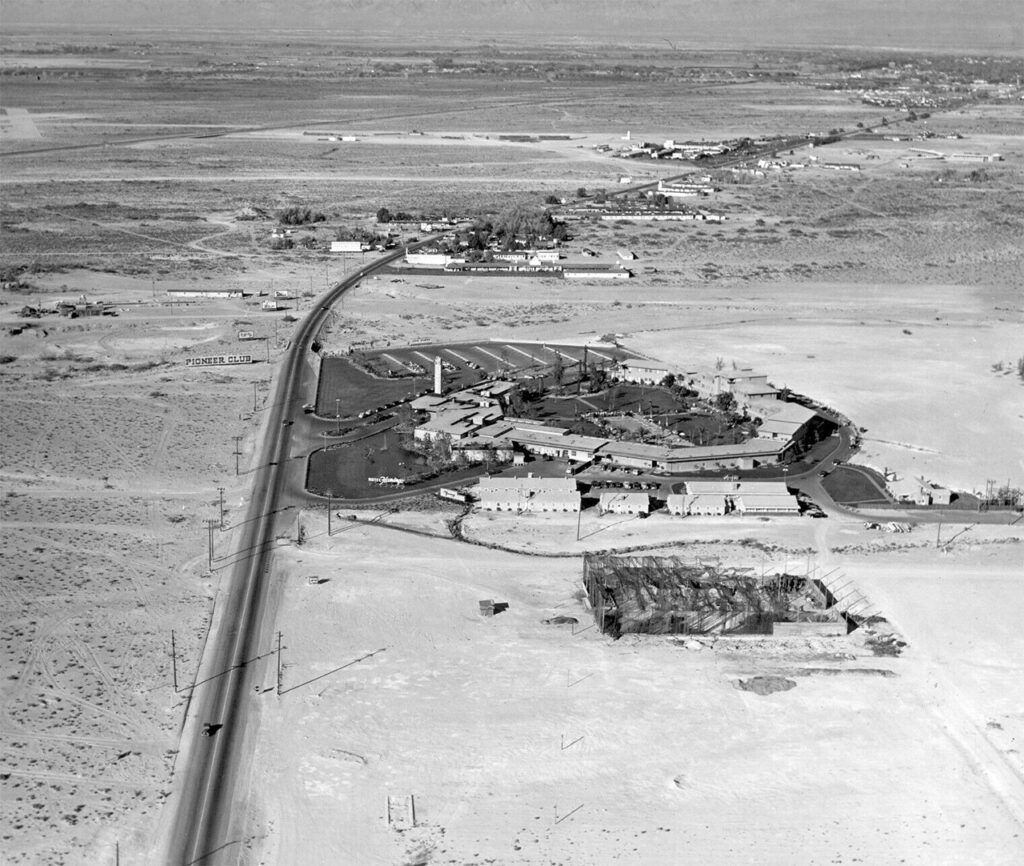
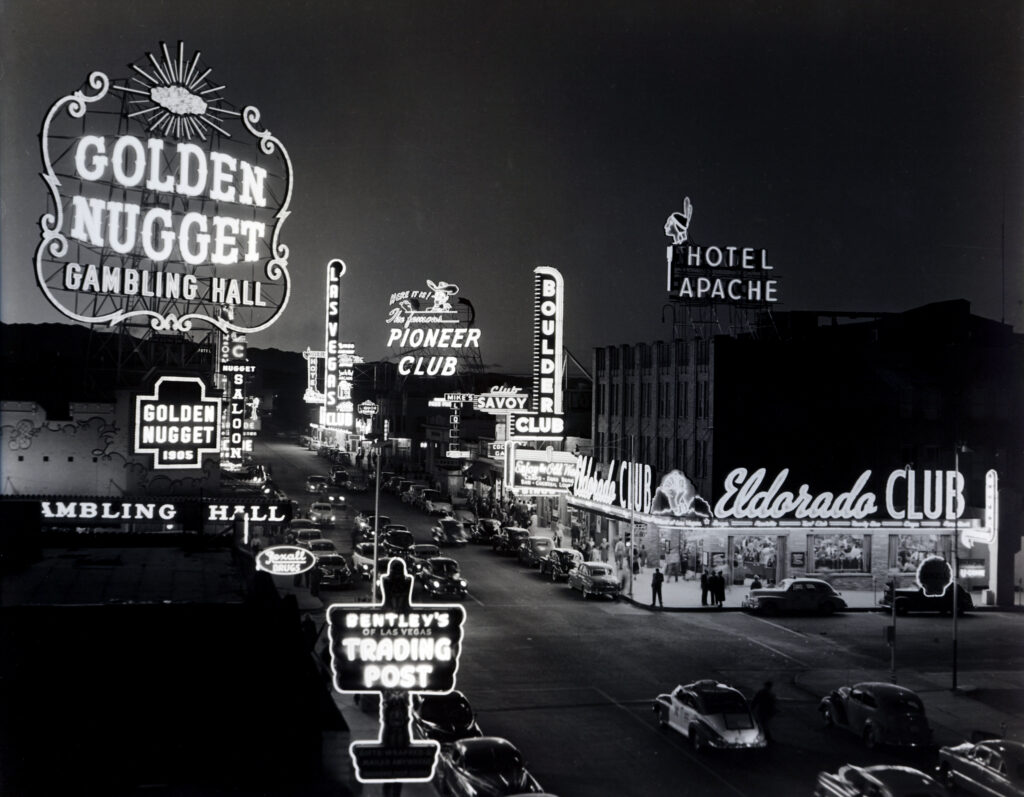
Las Vegas Has Always Been a City of Growth and Reinvention
The Las Vegas rental market did not begin with the pandemic. It developed alongside decades of population growth, resort expansion, neighborhood construction, economic change, and repeated reinvention.
These historical photographs show how dramatically Las Vegas has changed and why housing demand must be understood within a much longer story than one monthly market report.
How Has the Las Vegas Rental Market Changed Over 20 Years?
Today’s elevated rental rates are easier to understand when viewed against the housing boom, Great Recession, long recovery, pandemic migration surge, and later affordability slowdown.
Population Growth and Rapid Homebuilding
Las Vegas added residents, master-planned communities, apartment developments, and single-family housing rapidly during the early 2000s.
Mortgage credit was widely available, and many households that might otherwise have rented were able to purchase homes with small down payments or flexible financing.
Rental demand remained present, but the single-family rental sector was smaller and less institutionally owned than it would become after the housing collapse.
The Housing Collapse Reshaped Rental Supply
Las Vegas became one of the markets most severely affected by the Great Recession and foreclosure crisis.
Large numbers of former homeowners returned to the rental market, increasing demand at the same time that distressed houses became available to investors at deeply reduced prices.
Local investors, out-of-state buyers, and institutional companies purchased foreclosed houses, repaired many of them, and converted them into long-term rentals.
This period permanently expanded the Las Vegas single-family rental market.
Recovery and Gradually Increasing Rents
Population and employment recovered, distressed housing inventory was absorbed, and home prices began rising from unusually low post-recession levels.
Rental demand strengthened as the regional economy improved. Single-family rents generally increased, but the pace remained more gradual than the later pandemic-era surge.
By the end of the decade, Las Vegas had a large and established inventory of rental houses owned by individual landlords, small-scale investors, and institutional operators.
Pandemic Demand Drove Exceptional Rent Increases
The pandemic changed how and where many households wanted to live. Remote work, migration, household changes, historically low mortgage rates, and demand for additional space placed unusual pressure on houses with yards, offices, garages, and extra bedrooms.
At the same time, available rental inventory was limited and home prices increased rapidly.
Many Las Vegas Valley single-family rental rates increased approximately 40% to 50% between 2020 and 2024.
Rent Growth Slowed at an Elevated Baseline
As affordability became more strained and available rental inventory improved, renters became more selective and broad rent growth slowed.
Stabilization does not mean rents returned to their 2019 level. It means the unusually rapid increases slowed after resetting the market at a substantially higher baseline.
By fall 2026, the Las Vegas rental market remained active, but available single-family rental inventory had increased and fewer completed leases were occurring relative to earlier in the summer. Properly priced and prepared homes could still lease quickly, while renters had more competing choices.
How Institutional Investors Expanded the Single-Family Rental Market
Institutional investors became a significant part of the Las Vegas rental market after the Great Recession.
Large companies purchased groups of foreclosed and distressed houses, renovated many of them, and operated them as long-term rentals. These purchases helped absorb distressed inventory while also removing some houses from the owner-occupied resale market.

Build-to-rent communities have also added a newer category of single-family rental supply. These communities are constructed specifically for rental occupancy rather than converted from the existing resale housing supply.
Why Have Las Vegas Rents Stayed Elevated?
Several long-term conditions have kept Las Vegas rental rates above their pre-pandemic baseline:
- The valley continued adding residents and households.
- Home prices rose substantially between 2020 and 2024.
- Higher mortgage rates and elevated homeownership costs have made purchasing more difficult for some households.
- Some relocating households chose to rent before purchasing.
- Many existing houses remained in long-term rental portfolios.
- Construction, insurance, maintenance, HOA, labor, and ownership costs increased.
- Renters continued seeking houses with garages, yards, offices, and additional living space.
- New rental construction did not affect every neighborhood or property type equally.
These conditions do not guarantee future rent increases. They help explain why slowing rent growth did not cause the market to return to its pre-pandemic pricing level.
Rental rates can remain elevated without increasing rapidly every year. A stable market can still be significantly more expensive than the market that existed before 2020.