
California-to-Las Vegas Investment Strategy
Compare the Entire Operating Profile, Not Just the Purchase Price
Las Vegas real estate may allow a California investor to purchase more than one long-term rental with capital concentrated in a single higher-priced property. That flexibility can be useful, but a lower acquisition price does not automatically produce stronger cash flow, lower risk, or a better long-term investment.
A serious comparison should include realistic rent, vacancy, property taxes, insurance, HOA and SID or LID expenses, property age, maintenance, capital reserves, remote-ownership requirements, and future resale flexibility. Rice Real Estate & Property Management helps investors evaluate those operating details before a Las Vegas Valley rental property is purchased.
- Purchase Price and Rent
- HOA and SID or LID Costs
- Taxes and Insurance
- Property Condition
- Remote Ownership
- 1031 Exchange Coordination
This article provides general real estate and property-management information. It is not an appraisal, rent guarantee, investment recommendation, legal opinion, tax opinion, or projection of future performance.
Should a California Investor Buy Rental Property in Las Vegas?
Las Vegas may be a practical market for a California investor who wants to diversify real estate holdings, exchange into more than one property, reduce concentration in a single asset, or build a long-term rental portfolio with local management.
The decision should not be based only on the difference between a California sale price and a Las Vegas purchase price. A Las Vegas rental must independently support its expected rent, operating expenses, condition, location, maintenance exposure, and long-term ownership strategy.
California is not one uniform real estate market, and neither is the Las Vegas Valley. A coastal California property, an Inland Empire rental, a Bay Area condominium, and a Central Valley house may have very different values, rents, tax histories, financing, and ownership objectives.
The Las Vegas Valley is similarly varied. Summerlin, Green Valley, Henderson, southwest Las Vegas, North Las Vegas, and older central neighborhoods contain different property ages, HOA structures, purchase ranges, rental competition, and maintenance profiles. Investors can begin with our guide to where to invest in Las Vegas real estate , but every potential acquisition still requires property-level review.
A lower purchase price is a tool. It is not the complete investment thesis. The property must still work after realistic rent, vacancy, repairs, taxes, insurance, HOA expenses, management, and future capital needs are considered.
Compare Purchase Price With Realistic Long-Term Rent
A California investor may discover that the equity held in one higher-priced property could purchase multiple Las Vegas rentals. That can create flexibility, but dividing capital among additional properties does not guarantee a stronger return.
Start with the rent that the specific Las Vegas property can reasonably support. Automated estimates, active listings, and a seller's projections are useful reference points, but they do not replace recently leased comparable properties, current competing inventory, condition, floor plan, location, HOA rules, and the property's readiness for the rental market.
Review representative Las Vegas investment-property examples and our regularly updated Las Vegas rental-market statistics . Historical examples provide context, but they should not be treated as current offers, appraisals, or rent guarantees.
Rent Must Be Evaluated Against the Purchase Premium
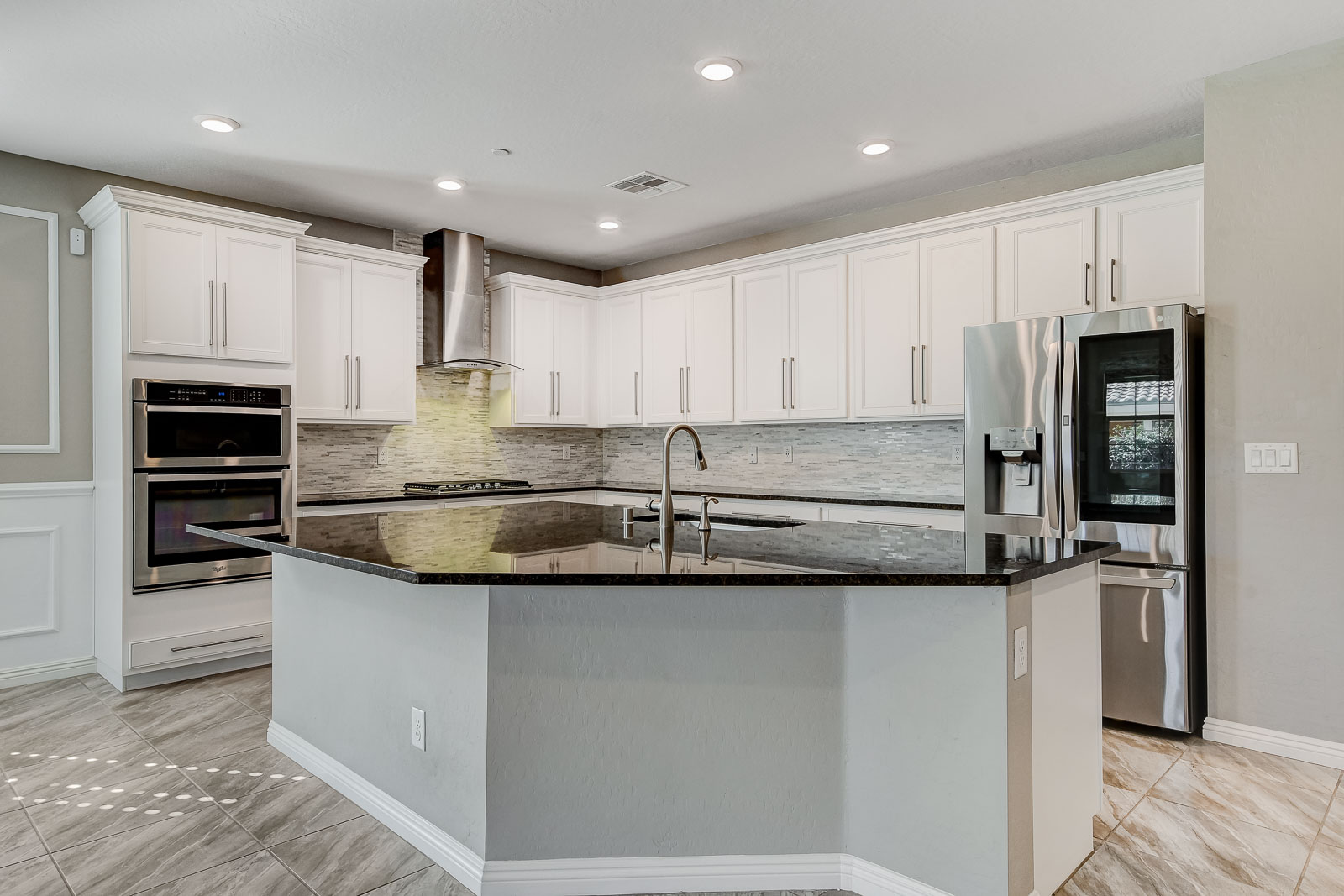
A recognized master-planned community may command a higher purchase price. The important question is whether the specific property also supports enough additional rent, Resident demand, condition, and resale flexibility to justify that premium.
The same rule applies to upgrades. A remodeled kitchen or newer flooring may improve leasing appeal, but the investor should not assume that every dollar spent on cosmetic improvements will be recovered through higher rent.

One $1.5 Million Property Versus Three $500,000 Rentals
A California investor may consider selling or exchanging one property valued near $1.5 million and acquiring three Las Vegas rentals near $500,000 each. The example is useful because it illustrates concentration and diversification, but it should not be treated as a recommendation or a projection.
| Investment Factor | One $1.5 Million Property | Three $500,000 Rentals |
|---|---|---|
| Vacancy exposure | One vacancy can interrupt all scheduled rental income from the asset. | Vacancy may be distributed, although more properties create more potential leasing events. |
| Resident and lease administration | One Resident household and one lease. | Three Resident households, three leases, and separate renewal decisions. |
| Property systems | Fewer separate roofs, HVAC systems, water heaters, and appliance groups. | Additional systems increase the number of possible maintenance and replacement events. |
| Location concentration | Performance is concentrated in one property and one immediate submarket. | Properties may be distributed among different areas, price ranges, or property types. |
| HOA administration | One association structure, when applicable. | Potentially three associations, sets of rules, budgets, and compliance relationships. |
| Future sale flexibility | The Owner generally makes one large disposition decision. | Properties may be sold separately, subject to market, financing, tax, and ownership considerations. |
| Accounting and oversight | Fewer transactions and property-level decisions. | More income streams, expenses, statements, reserves, and capital decisions. |
| Transaction costs | One acquisition, inspection, escrow, loan, and closing process. | Multiple inspections, escrow files, loans, title reviews, and closing-cost structures may apply. |
Three properties may reduce concentration in one asset, but they also multiply leases, systems, inspections, HOA relationships, repair decisions, turnovers, and future transactions. The correct structure depends on the investor's reserves, risk tolerance, financing, management plan, and intended holding period.

Remote Ownership Is an Operating Decision
The distance between California and Las Vegas is manageable, but a nearby property is not automatically a low-maintenance property. Remote ownership requires reliable local documentation, vendor coordination, property access, HOA communication, accounting, inspections, leasing, and timely decisions.
Rice Real Estate & Property Management works with California and other out-of-state Owners from the acquisition stage through long-term management. Property-management planning should begin before closing, particularly when repairs, HOA issues, leasing deadlines, or exchange requirements are involved.
Review the full Rice Real Estate & Property Management pricing and service structure and our documented tenant-screening process .
Coordinate a 1031 Exchange Before the Property Search Becomes Urgent
A California investor considering a tax-deferred exchange should assemble the professional team before selling the relinquished property or beginning a deadline-driven replacement-property search. The investor's qualified intermediary, CPA, attorney, lender, title company, escrow team, broker, and property manager have different responsibilities.
Rice Real Estate & Property Management can help define the Las Vegas acquisition criteria, evaluate potential replacement properties, coordinate access and inspections, estimate realistic long-term rent, review rental condition, and prepare an accepted property for management.
We do not act as a qualified intermediary and do not provide legal, accounting, tax, or investment advice.
California Exchange Reporting Deserves Separate Attention
Exchanging California real estate for property outside California may create continuing California reporting obligations. Investors should review the transaction with their California tax advisers rather than assuming that acquiring Nevada property ends every California filing requirement.
Review our guide to using a 1031 exchange for Las Vegas rental properties , the IRS like-kind exchange guidance , and the California Franchise Tax Board exchange-reporting guidance .
Define the Investment Criteria Before Reviewing Listings
A focused search is more useful than collecting attractive listings without an agreed operating standard. Before evaluating Las Vegas properties, identify the following:
Investors comparing premium planned communities can review our dedicated guides to Summerlin investment properties and Green Valley Ranch investment properties . These locations should be compared with other Las Vegas Valley options, not treated as the automatic answer for every investor.

California Investor FAQs
Is Las Vegas rental property less expensive than California rental property?
Las Vegas properties may be available at lower purchase prices than properties in many California markets, but neither state is one uniform market. Compare the actual California asset with the specific Las Vegas property, including rent, condition, expenses, financing, taxes, and future capital needs.
Can Rice Real Estate & Property Management help me buy and manage a Las Vegas rental?
Yes. Rice Real Estate & Property Management can help an investor define acquisition criteria, review potential properties, estimate realistic long-term rent, coordinate the purchase with the investor's professional team, prepare an accepted property for leasing, and provide ongoing property management.
Is buying three rentals safer than owning one expensive property?
Not automatically. Multiple rentals may distribute vacancy and property concentration, but they also create more leases, systems, HOA relationships, repair events, turnovers, and transactions. The structure should be evaluated against the investor's reserves, risk tolerance, financing, and management plan.
What expenses should I compare besides the purchase price?
Include realistic rent, vacancy, financing, property taxes, insurance, HOA dues, SID or LID installments, landscaping, utilities during vacancy, management, leasing, maintenance, turnover, and reserves for major systems and future capital expenditures.
Is Summerlin or Henderson better for a California investor?
Neither location is universally better. Summerlin and Henderson contain multiple communities, property ages, HOA structures, purchase ranges, and rental profiles. The right property is the one whose rent, condition, expenses, location, and long-term operating profile align with the investor's goals.
Can Rice Real Estate & Property Management coordinate with my 1031 exchange team?
Yes. We can coordinate the property search, rental evaluation, inspections, access, acquisition, rent-ready preparation, and management with the investor's qualified intermediary, CPA, attorney, lender, title company, and escrow team. We do not act as the qualified intermediary or provide tax or legal advice.
Do I need to travel to Las Vegas to purchase a rental property?
A purchase can often be coordinated remotely through electronic documents, local inspections, photographs, video, escrow, and direct communication. Whether the investor should visit depends on the transaction, property, professional advice, and personal preference.
Should I buy an older Las Vegas home or newer construction?
Both can work as long-term rentals. Newer homes may reduce some immediate system-replacement exposure, while established homes may offer different locations, lots, purchase prices, and rental profiles. Compare the actual property condition, HOA costs, supported rent, capital plan, and future resale flexibility.
Review the Property Before You Inherit Its Operating Problems
Rice Real Estate & Property Management can help a California investor evaluate the location, realistic rent, property condition, HOA structure, taxes, insurance, maintenance exposure, and management needs of a potential Las Vegas Valley rental before closing.
We manage houses, townhomes, and condos used as long-term residential rentals throughout Las Vegas, Henderson, Summerlin, North Las Vegas, and the surrounding Las Vegas Valley.